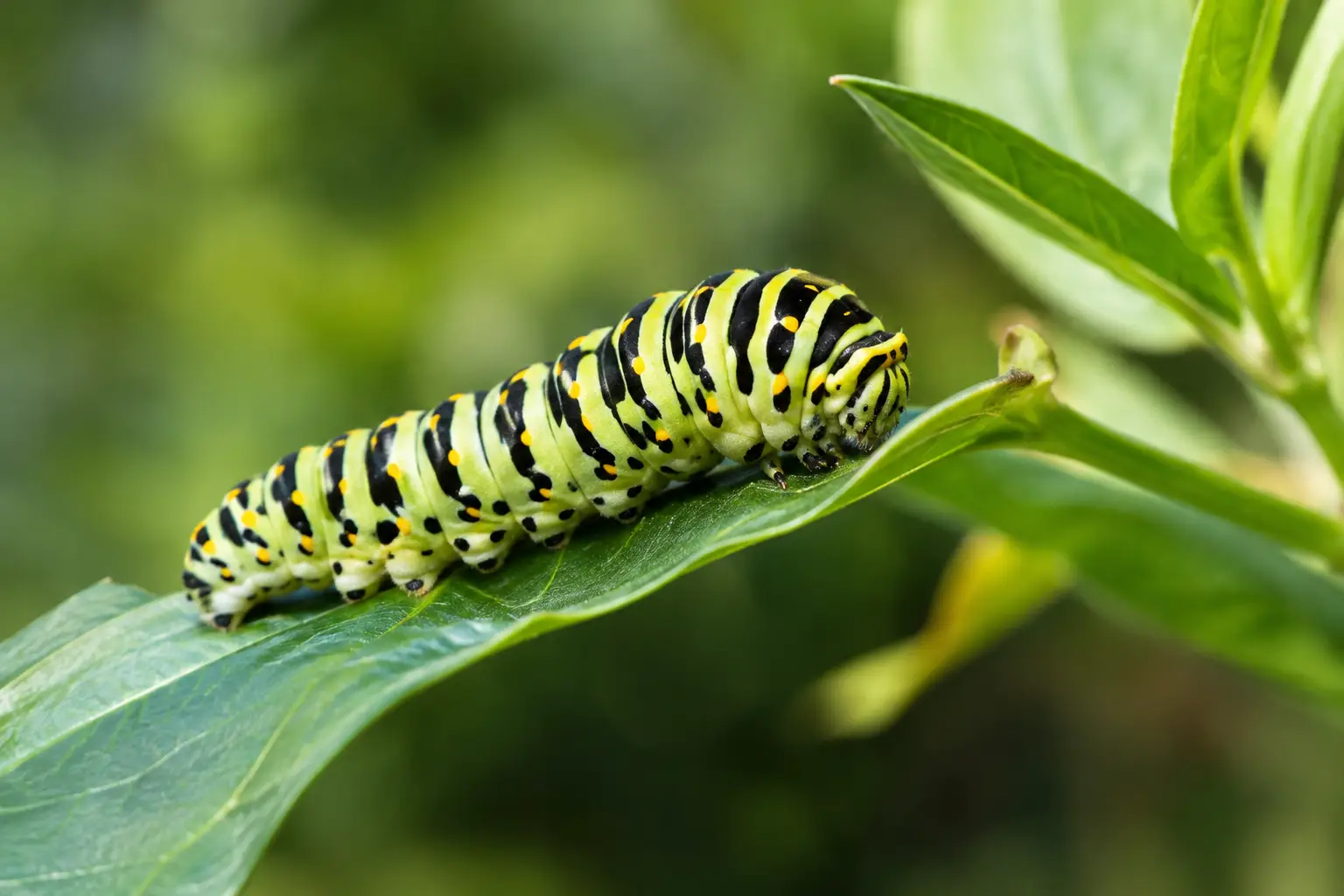
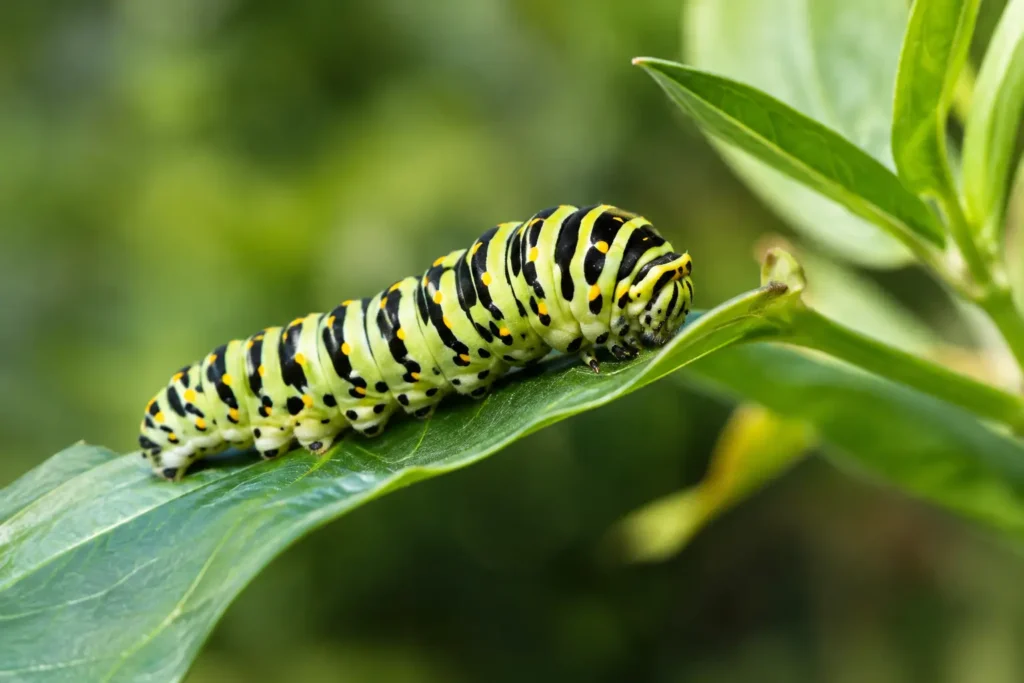
A caterpillar rests on a leaf, munching away while a child whispers, claps, or sings nearby. Can caterpillars hear sounds? Not with ears like ours, but many caterpillars can sense vibrations caused by sound. That means this small, wiggly creature may notice far more of its busy backyard than we first imagine.
For young nature explorers, that is a lovely reminder: animals do not all experience the world in the same way. A caterpillar may not hear a song as music, yet it can feel tiny movements traveling through the air, leaves, and stems.
Can Caterpillars Hear Sounds Like People Do?
Caterpillars do not have ears on the sides of their heads, and they do not hear words, bird calls, or songs the way people do. Instead, their bodies are wonderfully equipped to notice movement and vibration.
Sound is made when something vibrates. A guitar string vibrates when plucked. Your hands make the air vibrate when you clap. A bird’s call sends little waves through the air. Some caterpillars can detect these waves through fine hairs and other sensitive parts of their bodies.
Scientists have found that certain caterpillars react when they detect sound vibrations. A caterpillar might freeze very still, tuck its body, twitch, or move away. These responses can help it stay safe when something nearby could be dangerous.
Still, the answer depends on the caterpillar species. There are thousands of kinds of caterpillars, and their senses are not all exactly alike. Some may be especially sensitive to vibrations on the plant they are eating, while others may react more strongly to vibrations moving through the air.
Their World Is Full of Tiny Trembles
Imagine holding one end of a long piece of string while someone gently plucks the other end. Even without seeing the person, you might feel a little shake travel toward your hand. A caterpillar experiences part of its world in a similar way.
When a bird lands on a branch, a raindrop hits a leaf, or another insect crawls across a stem, the plant can tremble. Caterpillars may sense these small signals through their feet and bodies. Fine sensory hairs, called setae, also help them notice touch and movement around them.
For a caterpillar, a leaf is not simply lunch. It is also a moving pathway full of clues. Is the leaf shaking because of wind? Is another caterpillar nearby? Has a hungry wasp landed on the plant? Sensing vibrations may help the caterpillar decide whether to keep eating, hide beneath the leaf, or stay perfectly still.
Hearing, Feeling, and Noticing
Children often use the word “hear” because it is the easiest word for noticing sound. It is perfectly fine to begin there. Then you can gently add a new idea: caterpillars may not hear with ears, but they can feel some sounds as vibrations.
This is a wonderful early science lesson because it invites comparison. We use ears to hear a clap. A dog can hear sounds too soft for us to notice. A caterpillar may respond to the tiny tremble that a sound creates. Every creature has its own special way of gathering information.
Why Would a Caterpillar Need This Sense?
Caterpillars are soft-bodied and slow-moving, so they need simple, smart ways to avoid danger. They cannot fly away from a hungry bird. They cannot race across the garden like a beetle. But they can pay close attention.
Vibration sensing may offer an early warning. A sudden shake could mean a predator is close. Some caterpillars respond by becoming still, which can make them harder to spot. Others may drop from a leaf on a silken thread, curl up, or make a quick defensive movement.
Of course, not every shake means trouble. Wind makes plants sway all day long. Rain can drum on leaves. A caterpillar has to live in a world that is always gently moving. That is why researchers continue to study how different caterpillars sort useful signals from ordinary background motion.
A Gentle Listening Activity for Children
You do not need to make loud sounds or touch a caterpillar to explore this idea. In fact, quiet observation is the kindest and most interesting place to begin.
If you find a caterpillar outdoors, look first and leave it on the plant where you found it. Caterpillars often need very specific leaves to eat, so moving one to a different plant can make its day much harder. Watch from a comfortable distance for a few minutes.
Ask children wonder-filled questions: “What is the leaf doing in the breeze?” “Can you see the caterpillar’s tiny legs holding on?” “What happens when a raindrop lands nearby?” “Do you think the caterpillar can feel the leaf move?”
You might also place your own fingertips very lightly on a sturdy plant stem away from the caterpillar. Feel how the stem shifts when the wind blows. Then stand quietly and listen to the sounds around you: rustling leaves, buzzing insects, distant traffic, or a bird singing from a tree. The backyard is full of sound and motion, even when it looks calm.
What Not to Do
Avoid tapping the leaf, blowing on the caterpillar, shaking the plant, or placing it near a speaker. Those actions can be stressful for a small animal, and they do not teach children the most meaningful lesson. Nature study does not need poking and prodding. Patience gives us better discoveries.
It is also wise to look without handling unfamiliar caterpillars. A few kinds have irritating hairs or spines, and many are safest when left right where they are. An adult can help children practice the simple rule: look gently, wonder kindly, and wash hands after outdoor exploring.
Turn the Question Into a Story
A question about caterpillar hearing can become a whole afternoon of imaginative learning. Invite children to pretend they are a tiny caterpillar on a giant leaf. What would a footstep sound like? What would wind feel like? Would the rustle of a squirrel seem loud, or would it feel like the whole world was wobbling?
Abel and Ruth might pause beside a milkweed plant and notice that the caterpillar is still as a leaf vein. They could wonder whether it felt a flutter from a nearby bird. Children can draw the scene, color a caterpillar’s favorite leafy meal, or make soft “wind sounds” by rubbing two sheets of paper together.
For older children, try a simple comparison. Tap a spoon very gently against the table and ask them to listen. Then place a hand on the table and tap again. The sound is heard through the ears, but the vibration can also be felt through the hand. This is not exactly how every caterpillar senses its world, but it gives children a helpful way to understand that sound and movement are connected.
Small Creatures, Big Questions
The next time a child asks whether caterpillars can hear, you can say, “They do not have ears like ours, but they can sense tiny vibrations.” That answer leaves room for the best part: another question.
Pause beside the next leaf you find together. Watch its little visitor nibble, stretch, and hold tight as the plant sways. A quiet moment of noticing can help children see that even the smallest backyard creature has a remarkable way of meeting the world.