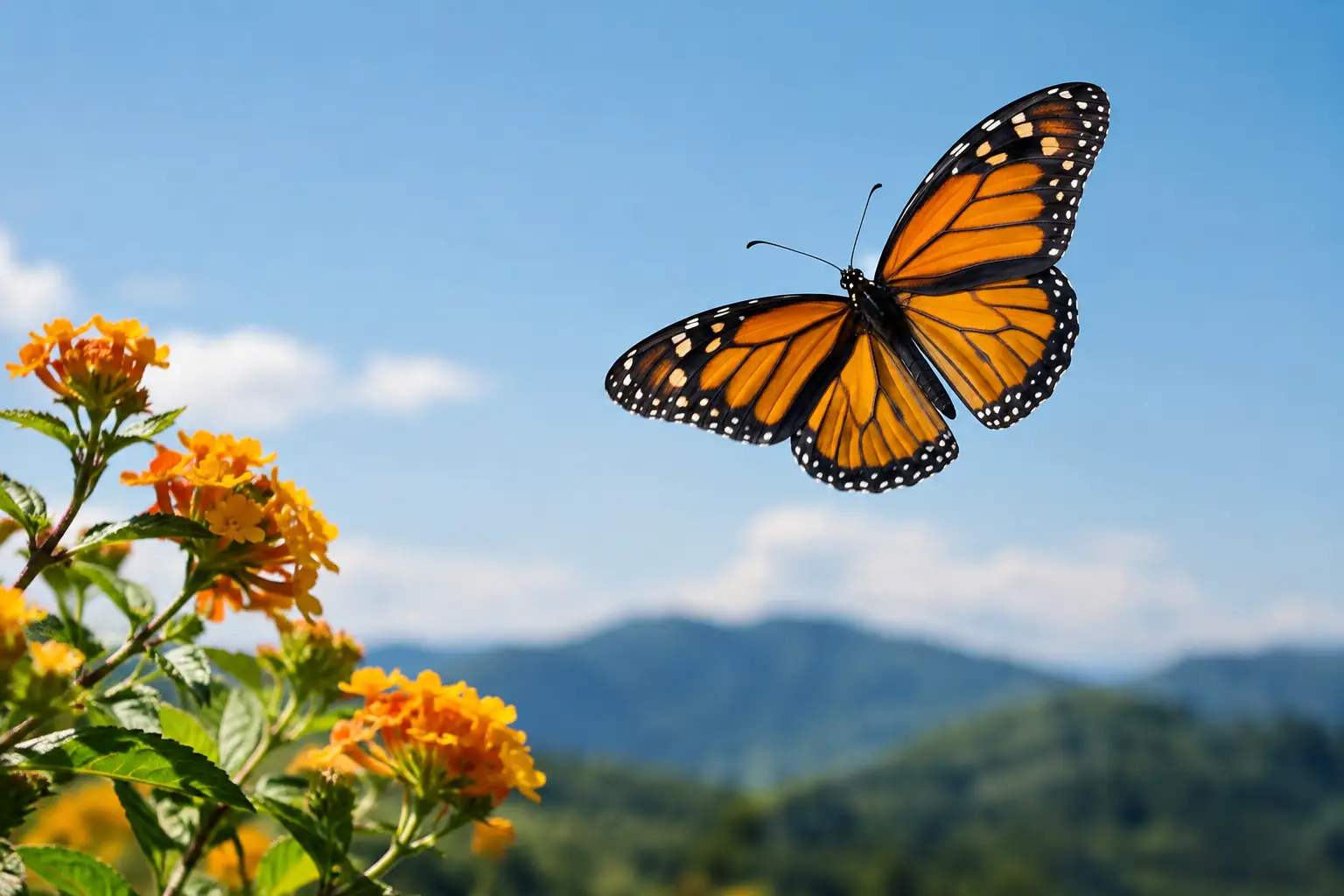
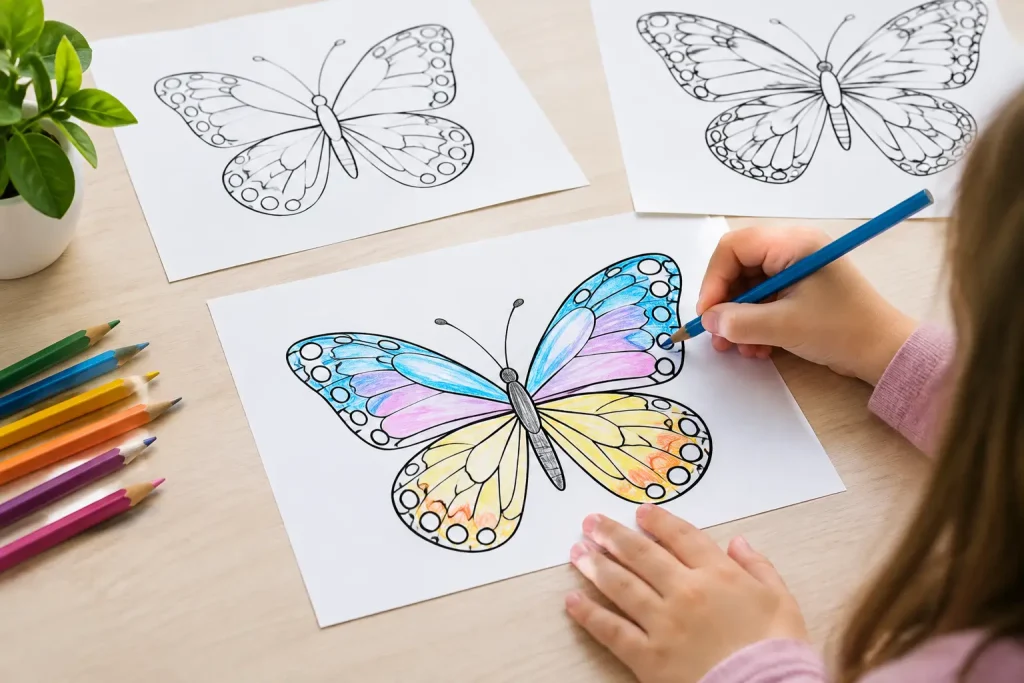
A child notices a butterfly long before they know its name. They see a flash of orange near the flowers, tiny feet resting on a leaf, or wings that seem to close like a little book. Printable butterfly coloring pages give that moment of wonder a place to grow. With crayons, colored pencils, or washable markers, children can slow down, remember what they saw, and create a butterfly all their own.
Coloring may look simple, but it can become a gentle beginning to nature learning. There is no need for a perfect picture or a long lesson. A page, a handful of colors, and a curious question can lead to a happy afternoon of learning, play, and creativity.
Why printable butterfly coloring pages inspire learning
Butterflies are especially inviting for young children because they are colorful, familiar, and full of surprises. Their journey from egg to caterpillar, chrysalis, and winged adult gives children a real-life example of change and patience. A coloring page lets them revisit that idea at a comfortable pace.
As a child chooses colors for a butterfly’s wings, they are practicing more than coloring skills. They may compare shades, notice patterns, strengthen hand control, and make decisions independently. Some children will carefully copy the colors of a butterfly they saw outside. Others may choose purple wings with green spots and a rainbow body. Both choices belong in the learning process. Observation builds science habits, while imagination makes the experience joyful.
For adults, printable activities offer a screen-light way to continue a favorite nature conversation. They are easy to bring to a kitchen table, reading nook, classroom center, waiting room, or grandparent’s house. Best of all, they leave room for connection. The grown-up does not need to have every butterfly fact ready. Simply wondering alongside a child is a wonderful start.
Turn coloring time into a small butterfly adventure
Before handing over the page, invite children to look closely at the butterfly’s shapes. Where are the wings? Can they find the antennae? Does one side look like the other? Young children often notice symmetry naturally when they see matching wing sections, even if they do not yet use that word.
Try offering a few colors rather than every crayon in the box, especially for younger artists. A small choice can feel less overwhelming and helps children stay focused. You might begin with yellow, orange, blue, brown, and green, then add more colors if they ask. Older children may enjoy looking at a butterfly photo from a nature book or remembering butterflies from a recent walk.
As they color, keep questions open and easy:
- What colors do you think would help this butterfly hide among flowers or leaves?
- Which pattern would you like to repeat on both wings?
- Where do you think this butterfly is flying?
- What might it drink from a flower?
There is no need to quiz children or correct imaginative answers. If a child says their butterfly eats strawberry ice cream, smile and let the story continue. You can gently add that real butterflies sip sweet nectar from flowers, then ask what flower their butterfly might visit next. This blend of pretend play and simple facts helps learning feel friendly rather than formal.
Add a story to the page
A finished coloring page can become the beginning of a story. Ask your child to name their butterfly and describe its day. Perhaps it wakes up on a milkweed leaf, meets a ladybug, finds a sunny garden, or rests safely when rain begins.
Children who are not yet writing can tell their story aloud while an adult writes down a sentence or two. Beginning writers might label the wings, flower, caterpillar, or chrysalis. This small extension connects art with language and shows children that their ideas are worth recording.
The Abel and Ruth stories are built around this kind of shared discovery: looking carefully, asking kind questions, and finding wonder in the natural world close to home. A coloring page can carry that same spirit beyond story time.
Bring the life cycle into view
A butterfly coloring activity is even richer when children can see that a butterfly was not always a butterfly. Use simple, child-friendly words: first comes an egg, then a caterpillar, then a chrysalis, and finally an adult butterfly. Children do not need to memorize every stage in one sitting. Repetition through stories, pictures, play, and coloring will help the sequence become familiar.
If you have several butterfly pages, place them in order to create a mini life-cycle display. A child can color one page each day or return to the project over a week. This approach works well for children who prefer short activities and for classrooms with limited time.
You can also make the stages physical. Curl up small like an egg, wiggle across the floor like a caterpillar, wrap arms around the body like a chrysalis, and gently stretch out wide like wings. Movement helps many young learners remember what they have heard and seen.
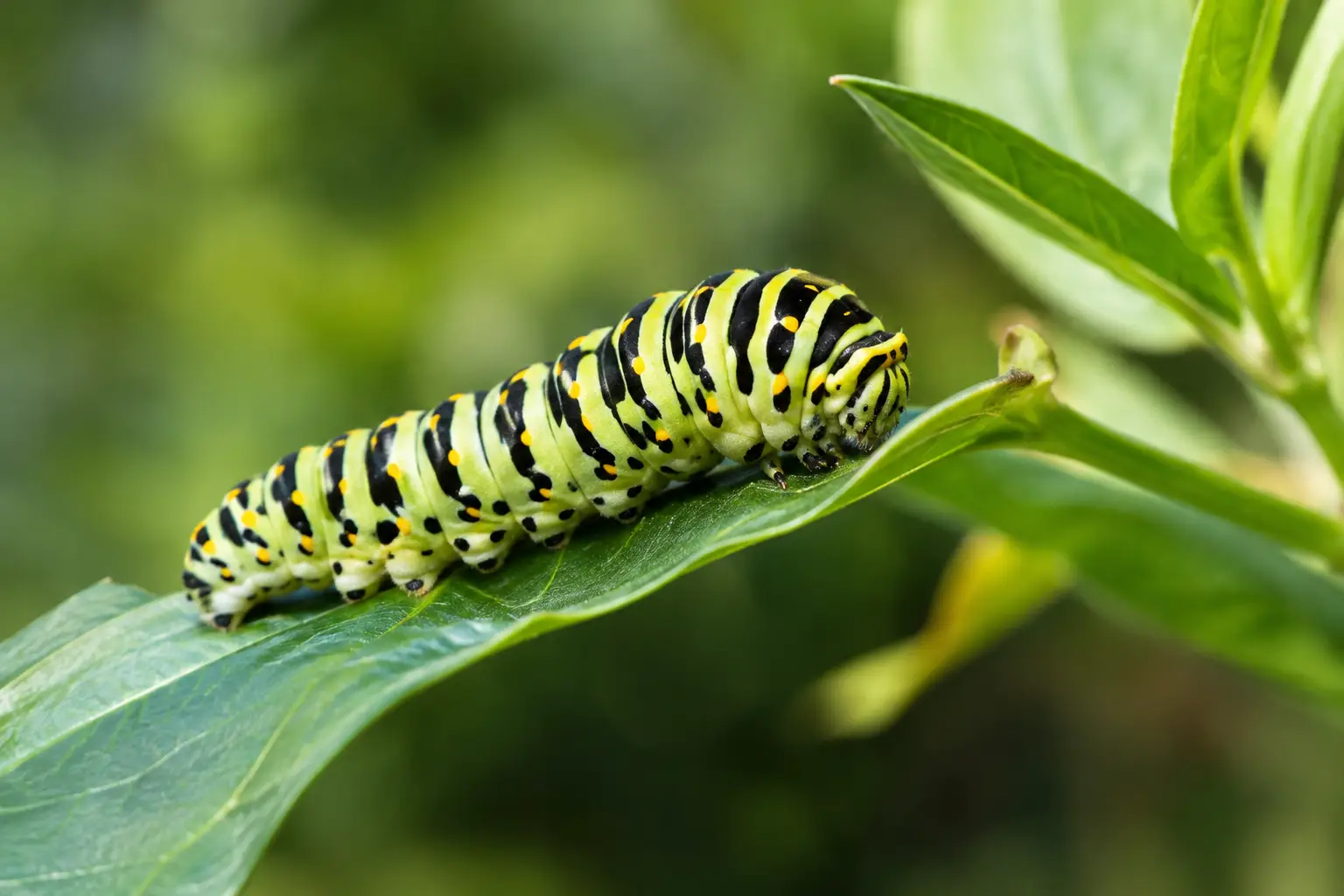
It helps to be honest about what coloring pages cannot show. A page can introduce the idea of transformation, but observing a caterpillar outdoors or reading a story about its changes makes the idea more meaningful. If you spot a caterpillar, admire it without taking it home unless you know how to care for it properly. Nature is not a craft supply. It is a living neighborhood we can visit with care.
Choose pages that fit your child
Not every coloring page suits every age or moment. Large, clear outlines are often best for preschoolers and children still building hand strength. They can enjoy broad wings, simple flowers, and big spaces for color without feeling frustrated by tiny details.
Children in the early elementary years may enjoy more detailed patterns, garden scenes, or pages that include life-cycle stages. Some will want realistic markings, while others will happily invent designs. Neither approach is better. The purpose is to encourage attention, confidence, and delight.
For a mixed-age family or classroom, offer the same butterfly theme in different levels of detail. A younger child might color a bold butterfly shape while an older sibling adds patterns, labels body parts, or writes a short nature poem. They can work side by side while still having an activity that feels right for them.
Make space for imperfect art
A butterfly with colors outside the lines is still a butterfly full of effort. Resist the urge to fix a child’s picture or show them a “right” way to color it. When adults value the process, children are more likely to keep trying, experimenting, and sharing what they notice.
If frustration appears, offer a fresh page, switch tools, or take a break to look out the window. Sometimes a child needs thick crayons instead of narrow pencils. Sometimes they need to color only one wing today. Small adjustments can protect the calm, capable feeling that makes creative learning worthwhile.
Extend the fun beyond the table
After coloring, hang the butterfly near a window, turn it into a greeting card, or place it in a homemade nature journal. A child may want to cut it out, but adults should handle scissors or help closely when needed. Adding a craft stick to the back can turn the picture into a puppet for retelling a butterfly story.
A short outdoor walk is another lovely next step. Look for flowers, leaves with interesting shapes, and sunny spots where butterflies might rest. You may not see a butterfly every time, and that is part of real nature observation. Encourage children to notice what is there instead: a bee, a bird, a seed, a cloud, or a new color in the garden.
You can also plant the seeds of environmental care with one gentle idea: butterflies need safe places with flowers and host plants. Children can help water a garden, leave flowers growing when possible, or simply admire insects without chasing or touching them. These small habits teach respect for living things.
The next time a child reaches for a butterfly page, let the crayons be an invitation rather than an assignment. Sit nearby, notice one lovely detail together, and see where their colorful little nature adventure leads.