A butterfly fluttering through a sunny garden can seem too busy to ever rest. That is why children often ask, where do butterflies sleep? The answer is full of quiet wonder: when daylight fades, most butterflies find a protected place, fold their wings, and become almost invisible until the morning sun warms them again.
Butterflies do not sleep in beds, nests, or little butterfly houses. They rest outdoors, close to the plants that help them stay safe. Looking for those resting spots can turn an evening walk into a gentle family science adventure, filled with careful eyes, patient waiting, and respect for tiny living things.
Where Do Butterflies Sleep at Night?
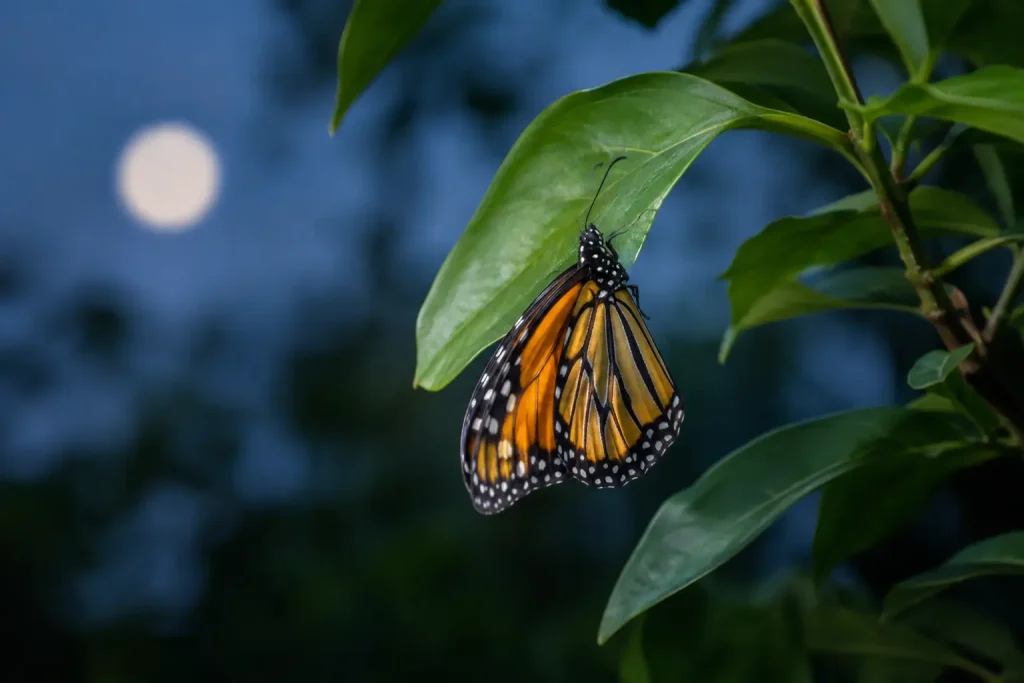
Most butterflies settle beneath leaves, inside tall grasses, on twigs, among flower stems, or in clusters of shrubs. These places offer some shelter from cool air, rain, wind, and hungry animals.
A butterfly may choose the underside of a leaf because it is harder for a bird to spot. Another may tuck itself into a patch of grass, where its wing colors blend with shadows and stems. Some species rest higher up in trees or bushes. There is no single butterfly bedroom. Each butterfly chooses a spot that works for its size, colors, and surroundings.
When a butterfly is resting, it often holds its wings closed above its body. Many butterflies have wing undersides that look like dry leaves, bark, or soft earth. Closing the wings helps them hide. A bright orange butterfly can suddenly look brown and leaf-like when it rests with its wings together.
Butterflies do not sleep exactly as people do, but they do enter a restful, quiet state called torpor. Their bodies slow down, and they become less active. Because butterflies need warmth to fly, a chilly night is a good time to conserve energy.
Why Butterflies Need a Safe Resting Place
Night can be a tricky time for a small insect. Temperatures drop, dew gathers on plants, and nighttime creatures begin searching for food. A good resting place helps a butterfly manage all of these challenges.
Shelter is especially helpful during rain or wind. A leaf, grass blade, or branch can block part of the weather. Still, butterflies are not completely protected. Their lives depend on finding good habitat with plenty of plants, hiding places, and nectar flowers.
This is one reason a nature-friendly yard matters. A perfectly bare garden may look neat to us, but it gives butterflies fewer places to rest. Native plants, small shrubs, flowering patches, and a few undisturbed corners can create a much kinder neighborhood for butterflies and other pollinators.
Do Butterflies Sleep in the Same Place Every Night?
Sometimes they may return to a familiar sheltered area, but butterflies do not usually have one permanent sleeping spot. Their resting place can change depending on where they spent the day, what the weather is like, and whether they find a safe plant nearby.
A butterfly that has been sipping nectar in a meadow may settle in the grasses at the meadow’s edge. One visiting a backyard flower bed might rest in a nearby shrub. The butterfly’s goal is not to get home before dark. Its goal is to find cover before the night becomes too cool and dark.
Some butterflies rest alone, while others gather together. This group resting is called roosting. A small cluster of butterflies may hang beneath leaves or gather on branches. Being together may offer a little extra protection, though scientists are still learning about all the reasons different species form groups.
What About Monarch Butterflies?
Monarchs are famous for one of nature’s most amazing journeys. In fall, many monarch butterflies travel long distances to warmer wintering areas. During their migration and winter stay, they can gather in large groups on tree branches.
Seeing a monarch roost can look like a tree decorated with orange-and-black leaves. The butterflies hang close together, especially during cool weather. When sunlight returns and temperatures rise, they may open their wings and begin to move again.
Not every orange butterfly is a monarch, and not every monarch you see will be part of a large roost. But monarchs offer a wonderful reminder that butterflies need safe places not only for feeding, but also for resting during a long journey.
How to Look for Resting Butterflies Kindly
An evening butterfly search is less about finding something and more about practicing observation. Butterflies can be difficult to spot at rest because hiding is exactly what they are trying to do. If your family does not find one, that means the butterflies may be doing a very good job of staying safe.
Try looking near sunset in a garden, park, or natural area where butterflies visit during the day. Scan the undersides of broad leaves, tall grasses, low branches, and quiet edges of flower beds. Move slowly and use your eyes first. A flashlight may disturb resting wildlife, so it is best to avoid shining bright lights directly onto plants after dark.
If you do spot a butterfly, keep a respectful distance. Do not touch its wings or shake the plant it is resting on. Butterfly wings are covered in tiny scales, and these delicate scales can rub off. A quiet look, a whispered observation, or a simple sketch is a lovely way to enjoy the moment.
You might invite children to notice three things: Where is the butterfly resting? What colors can they see with its wings closed? What nearby plants could be helping it hide? These small questions build the habits of a young naturalist without turning the outing into a test.
Make a Butterfly-Friendly Resting Spot
Families do not need a large yard to help butterflies. A few healthy plants can make a difference. Choose flowering plants that offer nectar in your region, and include leafy plants, grasses, or small shrubs that provide cover. A container garden can support visiting butterflies, although a larger planted space will usually offer more shelter.
Leave some parts of the garden a little wild. Fallen leaves, seed heads, and tall grasses can be useful parts of a living habitat. This does not mean every corner must look messy. It simply means making room for nature alongside the spaces where your family plays and relaxes.
Avoid spraying pesticides where butterflies, caterpillars, bees, and other helpful insects live. Even products meant for garden pests can harm the small creatures that visit flowers and leaves. When children help care for a garden, they learn that being gentle with nature is an active choice.
A Quiet Evening Activity for Curious Kids
After reading a butterfly story or spending time outside, invite your child to draw a “butterfly bedtime place.” They can draw a leaf, twig, flower stem, or grassy meadow, then add a butterfly with its wings folded closed. Ask them to imagine what the butterfly might notice as the sky turns dark: a cool breeze, a cricket song, the smell of damp soil, or the first bright star.
For an extra bit of learning, compare a butterfly’s resting place with your child’s bedtime routine. People may brush teeth, put on pajamas, and climb into bed. Butterflies slow down, find shelter, fold their wings, and wait for warmth. Both need a safe place to rest.
Abel and Ruth would likely agree that some of the best nature discoveries happen when we slow down enough to notice what is usually hidden. The next time your child asks where butterflies sleep, look together toward the leaves and grasses at the edge of the day. A quiet garden may be full of tiny nighttime guests, resting safely until morning brings them back into the sun.