A tiny beetle on the sidewalk can stop a kindergartener in their tracks. Where is it going? Does it have a home? Can it fly? Those small, sincere questions are a wonderful place to begin. The best insect activities for kindergarten do not need complicated supplies or long explanations. They simply make room to notice, wonder, create, and return outdoors together.
At this age, children learn through their whole bodies and imaginations. A story, a walk, a song, and a crayon drawing can all help an insect become more familiar. The goal is not to memorize every insect name. It is to help children look closely and feel gentle curiosity about the busy little neighbors sharing their world.
8 insect activities for kindergarten that invite wonder
1. Go on a slow bug walk
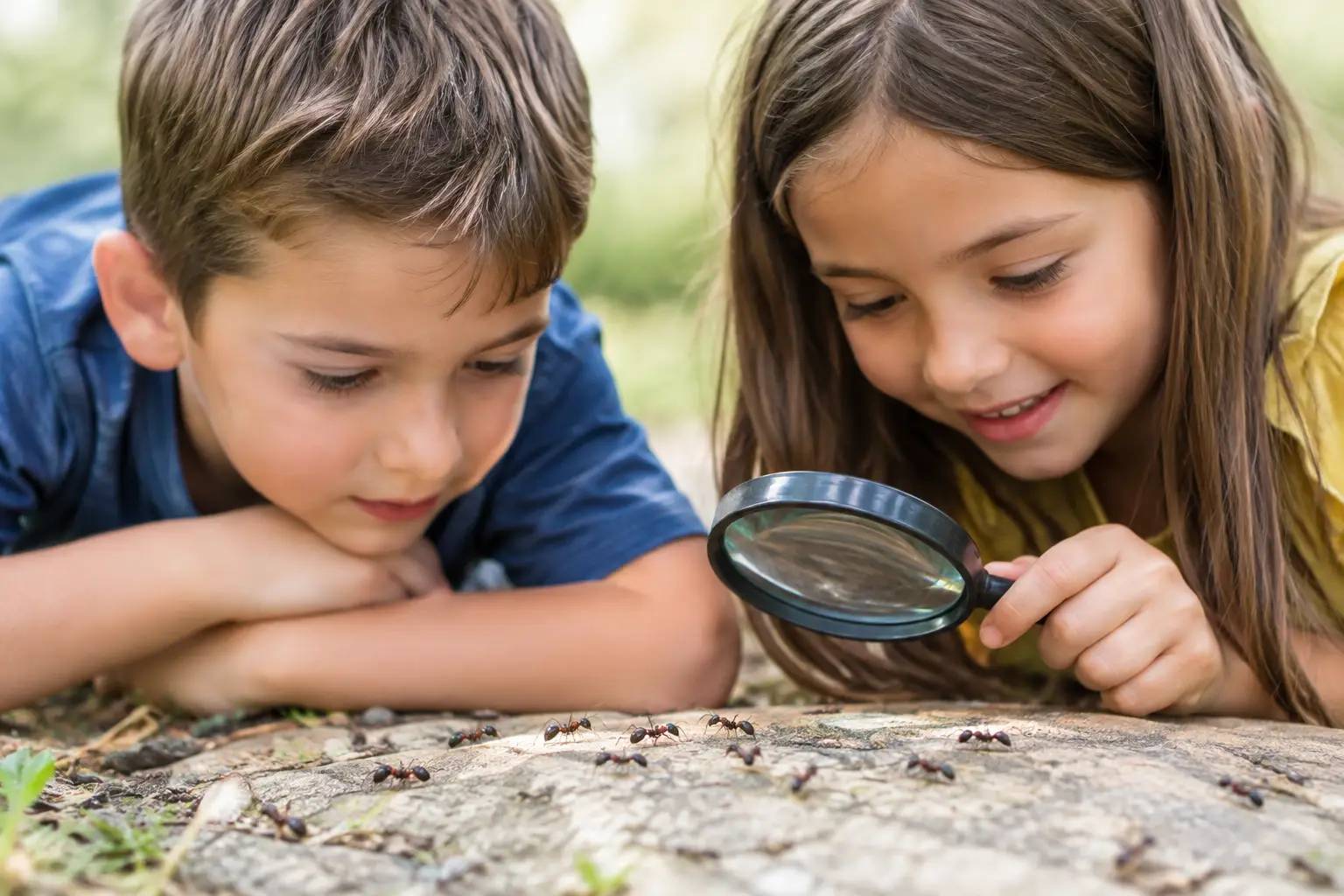
A bug walk works best when it is slow enough to notice the small things adults often step past. Bring a clipboard, a piece of paper, and crayons outside. Invite children to look near flowers, under leaves, along fences, and on tree bark. Remind them that insects are living creatures, so eyes and gentle hands are the best tools.
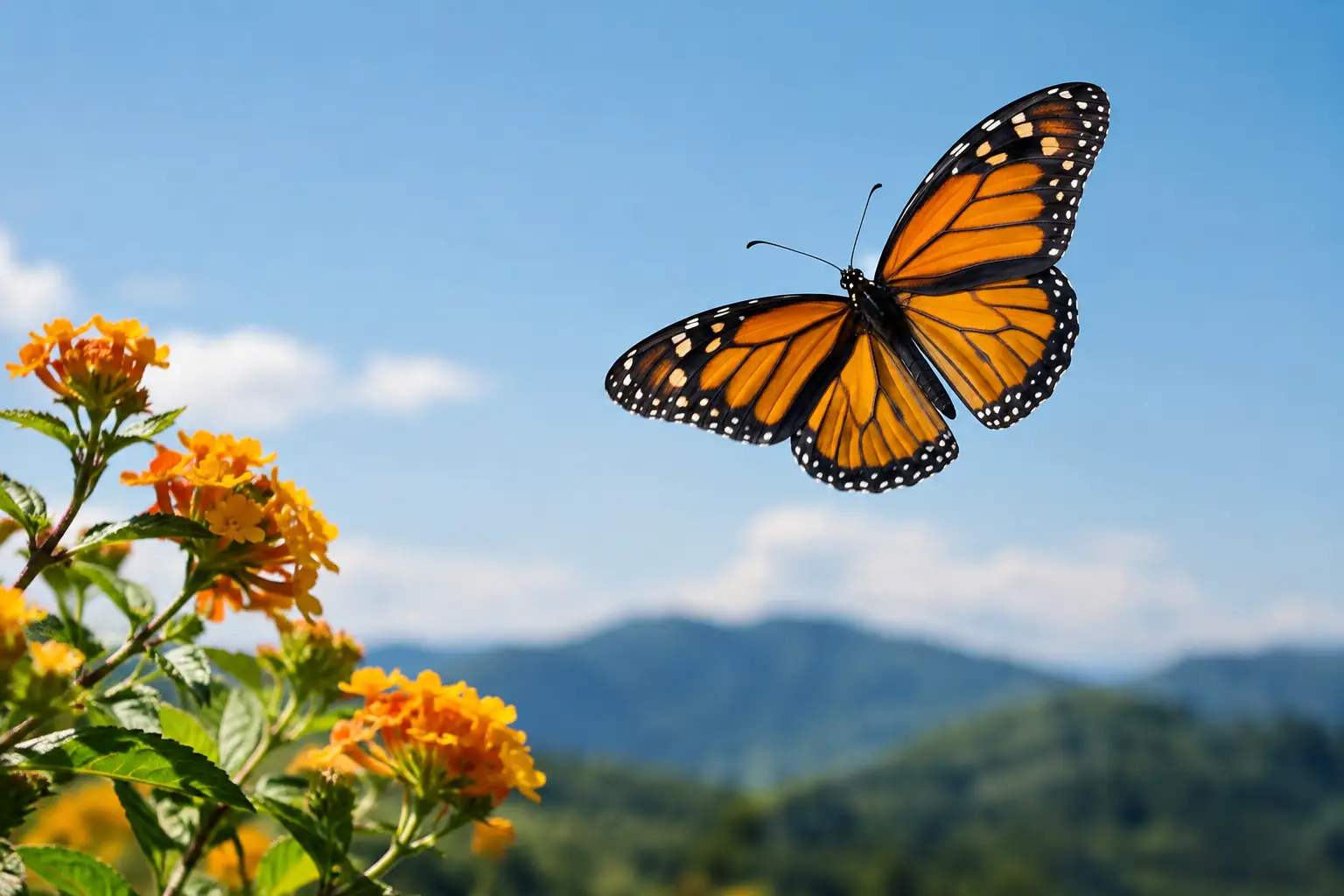
Ask open questions as you walk: “What do you notice?” “How is it moving?” “What colors do you see?” A child may spot an ant carrying a crumb, a butterfly resting on a flower, or nothing at all for several minutes. That is okay. Listening for buzzing, watching a spiderweb move in the breeze, and noticing a chewed leaf are discoveries, too.
Back inside, each child can draw one thing they saw or hoped to see. For children who are still building confidence with drawing, let them dictate a sentence for an adult to write: “I saw a black ant walking fast.”
2. Make an insect observation tray
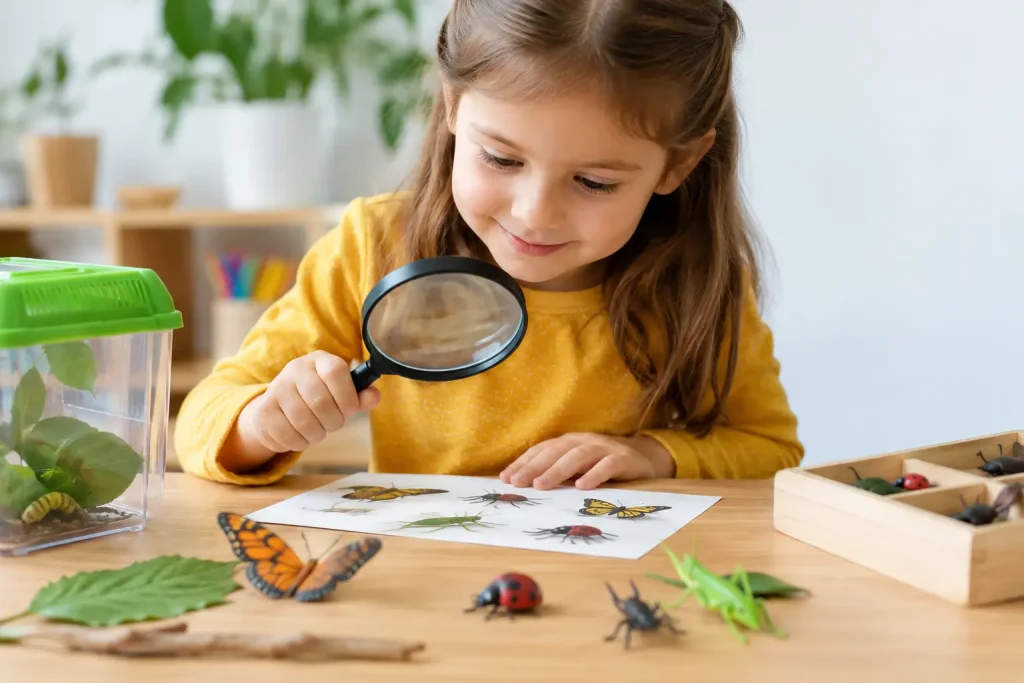
Set out a few nature treasures in a shallow tray: a fallen leaf with tiny holes, a pinecone, a flower petal, smooth stones, and a small stick. Add toy insects or insect picture cards if you have them. This simple invitation gives children a quiet place to examine patterns, colors, and shapes.
A magnifying glass can make the experience feel especially magical, but it is not required. Children can sort objects by texture, find places where a pretend insect could hide, or use the pieces to tell a small story. Perhaps a ladybug has lost its way home, or a grasshopper needs a safe place to rest.
Use only fallen natural items, and return them outside when play is finished. A tray is easier to manage than bringing live insects indoors, which can be stressful for the creatures and disappointing for children if an insect gets hurt or escapes.
3. Read an insect story, then act it out
Stories give young children a friendly doorway into science. Choose a picture book about one insect, then invite children to move like that creature. They can flutter like butterflies, march in an ant line, rub their hands like a cricket, or crouch still like a praying mantis waiting patiently on a leaf.
After reading, offer a few simple props such as scarves for wings, cardboard tubes for tunnels, or paper circles for a pretend flower. There is no need to correct every detail during imaginative play. If a child says a butterfly lives in a castle, enjoy the story first. Later, you might gently add, “A butterfly may rest on a leaf or flower outside. Shall we look for a good butterfly resting place?”
The Abel and Ruth Children’s Discovery Series is designed around this kind of story-to-play connection, pairing backyard creature adventures with creative activities that keep the discovery going.
4. Create a fingerprint bug garden
Fingerprints are nearly the perfect size for a tiny insect body. On a sheet of paper, paint or draw a garden with stems, leaves, and flowers. Then use washable paint pads or dots of paint to make fingerprint ladybugs, bees, caterpillars, and beetles.
When the paint is dry, children can add legs, antennae, spots, and wings with markers. Count the ladybug spots together or compare the different body shapes. A ladybug has six legs, as do bees and ants, while a spider has eight legs and is not an insect. That last detail often delights kindergarteners, but keep it light. One cheerful reminder is plenty.
This activity builds hand strength and early counting skills while leaving lots of room for personal expression. A purple bee or a polka-dot grasshopper is welcome in a kindergarten garden.
5. Build a pretend insect home
Give children a basket of safe, loose materials such as paper tubes, egg cartons, clean cardboard pieces, fabric scraps, leaves, and small boxes. Invite them to build a shelter for a chosen insect. An ant might need tunnels. A bee might need flowers nearby. A stick insect may want a tall branch to blend into.
As children build, talk about what animals need: food, water, shelter, and a safe place to rest. The conversation can stay wonderfully simple. “Where will your insect find a snack?” “How will it stay dry when it rains?” “What might visit this home?”
A pretend habitat is often a better choice than an insect hotel placed outdoors, especially with young children. Real insect homes need thoughtful materials, careful placement, and ongoing care. A cardboard creation lets children explore the idea without accidentally disturbing wildlife.
6. Sing, tap, and move an insect rhythm
Many insects make sounds or move in repeating ways. Turn that idea into a little music session. Tap a steady beat for marching ants: tap, tap, tap. Clap slowly for big butterfly wings. Rub hands together softly for cricket sounds. Then let children choose an insect and create its own rhythm.
You can make a call-and-response game: “I hear a busy bee,” followed by a gentle buzz and two arm flaps. Children listen, copy, and take turns leading. This supports careful listening, coordination, and confidence without feeling like a lesson.
For a calmer variation, play “freeze like an insect.” Children move around the room, then freeze when you call out an insect name. A praying mantis pose can be especially fun, with arms folded quietly in front.
7. Follow the caterpillar’s changing story
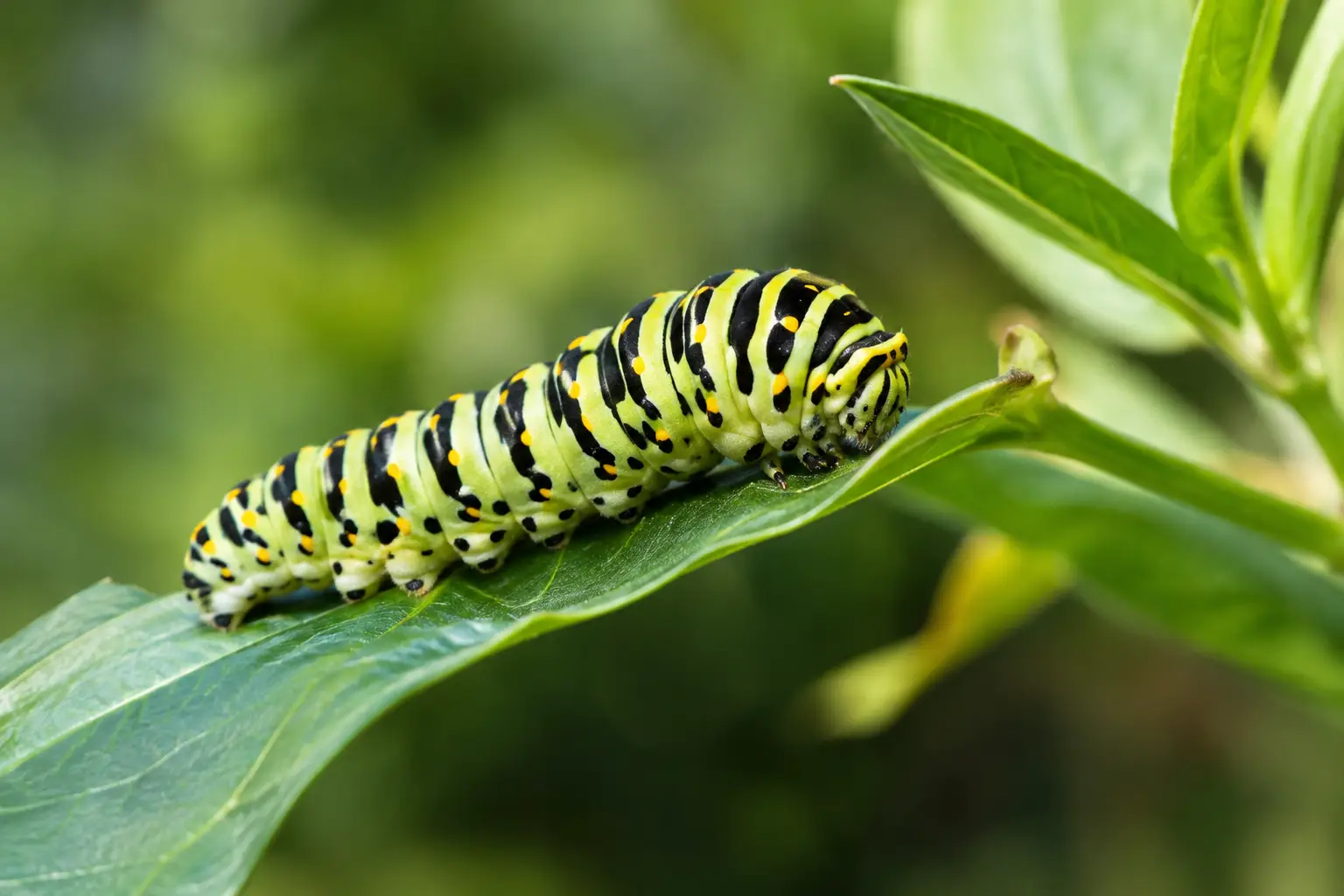
The life cycle of a butterfly is full of wonder, but it can feel like a lot of information when presented all at once. Keep it hands-on and tell it as a sequence: egg, caterpillar, chrysalis, butterfly. Make four simple cards together, or use paper circles and drawings to show each stage.
Place the cards in order, mix them up, and invite children to help the story find its beginning again. Then let them curl into a tiny egg, wiggle across the floor as a hungry caterpillar, wrap themselves in a blanket or scarf as a chrysalis, and rise with wide butterfly wings.
Be careful with the word “sleeping” for a chrysalis. It may help a child picture stillness, but a chrysalis is changing in a remarkable way. You can say, “It looks quiet on the outside, while the caterpillar is growing into a butterfly inside.”
8. Host a five-minute insect watch
Choose one small outdoor spot and sit together for five minutes. It might be beside a flowering plant, a patch of grass, or a sunny wall. Set a timer if that helps, but let children know they do not have to fill every second with talking. The quiet is part of the activity.
Afterward, share observations rather than asking for a correct answer. “I noticed two tiny flies.” “I heard a buzzing sound.” “I saw a yellow flower but no bees.” Even when insects do not appear, children practice patience and learn that nature does not perform on command.
Try the same spot at another time of day or during another season. The changes can be surprising. A place that seems still one afternoon may be full of ants after a picnic or buzzing with bees when more flowers bloom.
A few gentle ways to make insect play feel safe
Kindergarten insect activities are most joyful when children know how to be kind observers. Offer a simple family or classroom phrase: “Look close, touch gently, leave a home in peace.” Teach children to watch from a small distance, especially around bees, wasps, and unfamiliar insects.
If a child feels nervous, do not push them to hold or approach a bug. They can observe from far away, draw what they see, or use a toy insect first. Curiosity grows best when a child feels safe and in control.
There is also no need to turn every outdoor moment into a planned activity. Sometimes the richest learning happens when a child points to an ant trail while walking to the car, or notices a moth near the porch light after dinner. Pause when you can. Wonder has a way of growing when it is given a little time.